
Abiriba is located in Abia State, Nigeria, specifically within the Ohafia Local Government Area. It is an ancient kingdom known for its development and is sometimes referred to as “Small London” due to its infrastructure. The town is composed of three main villages: Ameke, Amaogudu, and Agboji.

Read about Abiriba history and it’s Enachioken, past and present:
Abiriba people are among the original group of the Igbos that lived in the Niger Confluence Area (Present day Kogi State of Nigeria) several centuries ago. During the great dispersal towards the South and the coastal areas, they were among the group that struck North to develop into the North- eastern Igbo. From their original abode, they drifted eastwards towards the Ogoja Obubra ridge. This movement continued until they crossed Yakor to Ena in the upper Cross-River Area (present Cross-River State of Nigeria).
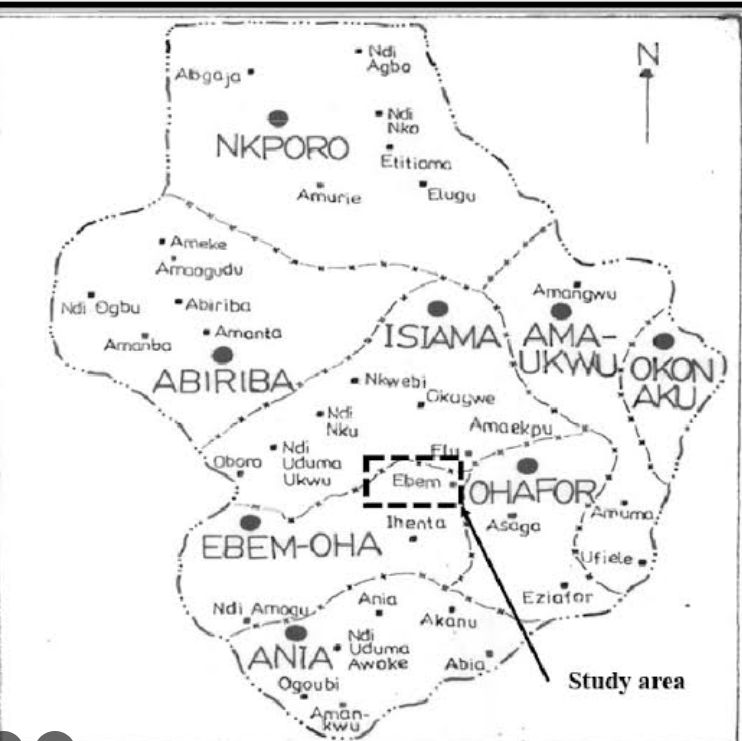
Our ancestors lived with the Ena people for several decades before they continued in their migration. The journey took them through Ebaribara, Udaraebuo and Urunta until they reached Agboha which was under the leadership of the Egbokwus. Other settlements that were scattered in the area, but not known to the Egbokwus, were Umuhu people (that lived in Nyirim), a group of Nkporo people (that lived at Afiankwo Ochie or Ekeri), Mbughu and Ezeji (that lived at Ogbu) and Awoife (that lived at Amaogudu).
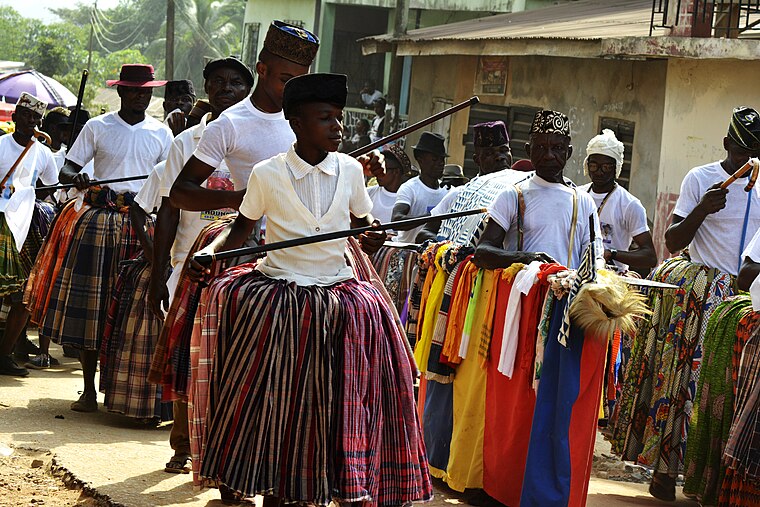
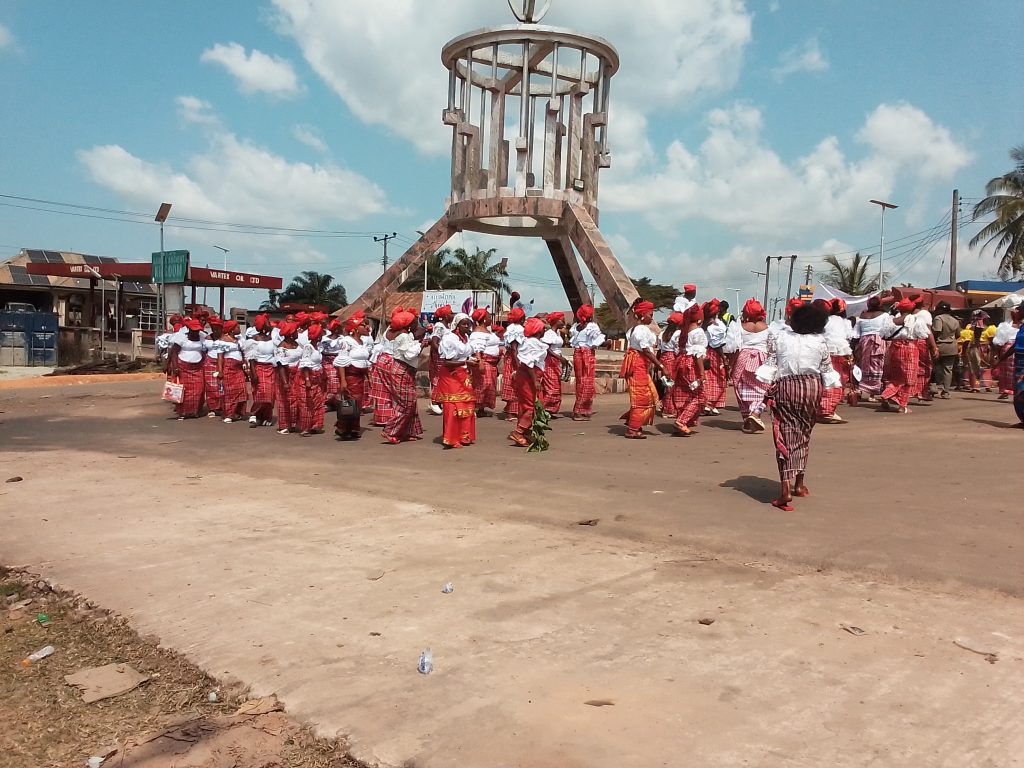
As distinguished warriors, the Abiriba people under the leadership of Oke Ukpabi Nnachioke, took over the entire settlement and named the place Abiriba. Thus, Abiriba kingdom was founded in it’s present location about 1472. However, some of the leaders of the former settlements who refused to come under the power and influence of Oke Ukpabi had no option than to leave the area. Umuhu people left Nyirim to their present location; while a group of Nkporo people left Afiankwo Ochie (Ekeri), first Ugwuagbala and finally to their present location.
The leader and founder of Abiriba, OKE UKPABI NNACHIOKE reached Agboha with his four sons, two women (Nnem Nwaele and Nnem Nwaenyi) and a band of warriors. The sons were Inyima, Oko, Chukwu and Ali. Among his sons, it was Oko (a.k.a Oko-ogo or Okonta Ogba Enwo), while plying his trade as a hunter, that discovered life in the surrounding areas of Agboha and informed the family which led to the relocation and founding of the seat of power of the Enachioken (Eze Abiriba) at the present location. Hence, “Agboezi” was named after him, Nde Oko-ogo Royal Compound.
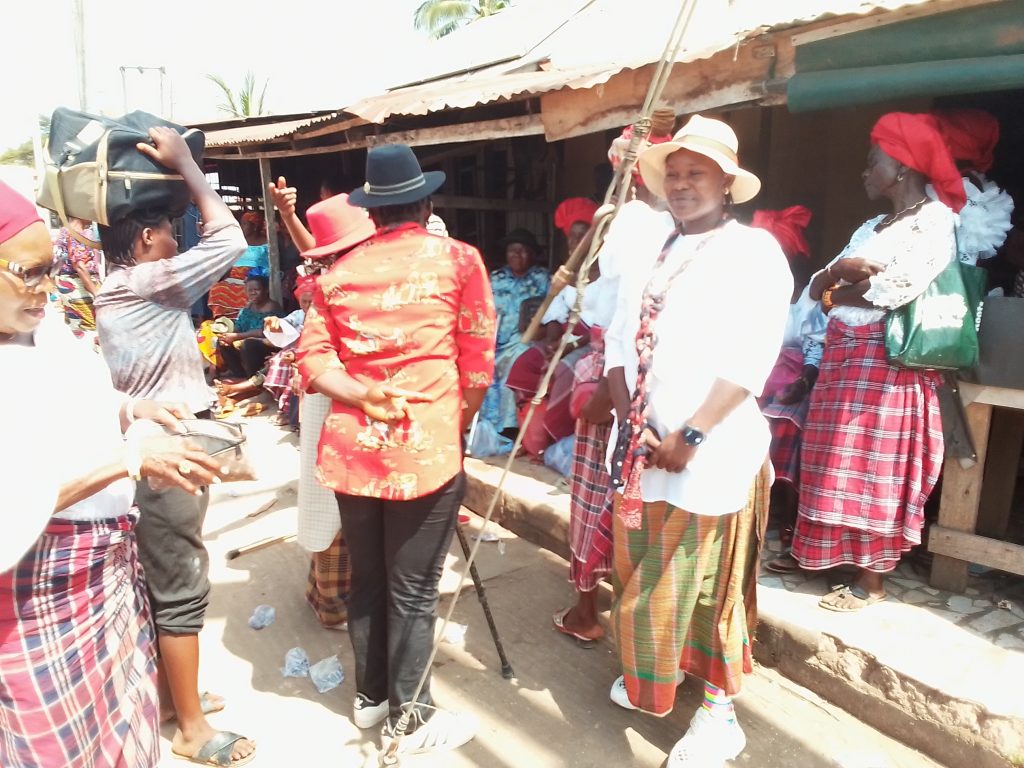
From this vantage position, Abiriba grew in wealth, length and breadth. The kingdom grew into three principal communities; to wit: Amaeke, Agboji and Amaogudu. Ameke developed into 10 traditional villages and later into 11 villages at about 1941. These villages are: Ameke Echichi, Thungwu, Agboha, Ihebu, Umueso, Amaebelu, Amaja, Amanta, Amuba, Binyom and Ukpo. Agboji has 2 traditional villages, namely-Amabia and Amagbo. Finally, Amaogudu has 4 villages, to wit: Umuechukwu, Amamba, Ogbu and Udanta.
Amaeke-Echichi has 10 traditional compound (“Ezi”), Ihungwu 7 compounds, Umueso – 19 compounds, Amaja 9 compounds, Ihebu 9 compounds, Amaebelu – 7 compounds, Amanta – 14 compounds, Amuba 12 compounds, Agboha – 3 compounds (formerly 8 compounds), Binyom – 9 compounds and Ukpo 7 compounds. Amabia 9 compounds and Amagbo 7 compound, Umuechukwu 20 compounds, Amamba 14 compounds, Ogbu 8 compounds and Udanta – 16 compounds. Apart from these traditional villages, Abiriba Kingdom, in recent years, has further expanded with the formation of 72 different layouts spread across the three principal communities.
THE ENACHIOKEN (PAST AND PRESENT)
Succession to the throne of Eze Abiriba (Enachioken) is hereditary. It is only the descendant must emerge from any of the ruling houses in the three royal compounds of “Nde Oko-ogo, Nde Mbaeku and Nde Ekpe” who rule Abiriba in rotation. The Enachioken of Abiriba originally emerges from Nde Oko-ogo Royal Compound alone. However, due to developments, some of the descendants of the founder of Abiriba moved over to Amaelunta to ply their blacksmith trade.
From Amaelunta (Nde Mbaeku and New Ekpe), they come to rule Abiriba when it is their turn to do so. From the founding of Abiriba till date, 17 Enachioken (Eze Abiriba) has ruled the kingdom. They are: Oke Ukpabi Nnachioke, Inyima Oke Ukpabi, Ukpabi Oko Oke, Eleoba Ikwuagwu Ukpabi, Oko Uduka Ukpabi, Ugwa Eleoba Ikwuagwu, Uduka Mbaeku Okonta (a.k.a Udukanta or Uduka Okonta), Itu Okali Mbaeku, Egbara Ogbu Ifegwu, Ogbu Ikpe Chukwu/Ukiwo Obu Okiriko, Uduka Otaka Ukaegbu, Nmaju Otaka Uduka (a.k.a Nna Nmaju), Okoroafor Udeji Otisi (a.k.a Okoroafor Nwaeze or Nwa Udeji), Ikpe Mba Oko, Okoro ljagha Kalu, Ukiwo Ukoha Ukiwo and Kalu Kalu Ogbu.
Eze Ukiwo U. Ukiwo (II) who ruled from Nde Oko-ogo, passed on late in 1998 and it became public knowledge around the middle of January, 1999. Thus, by the principle of rotation which has been in use since after the reign of Eze Nmaju, it became the turn of Nde Ekpe to produce the next Enachioken. The move for the selection of his successors, in line with Abiriba tradition, custom and it’s usage, was very tasking and challenging. However, HRM EZE K. K. OGBU (IV) emerged from the Ifegwu Ekpe Ruling House of Nde Ekpe Royal Compound (Amaelunta), Abiriba and was traditionally crowned in 2000.
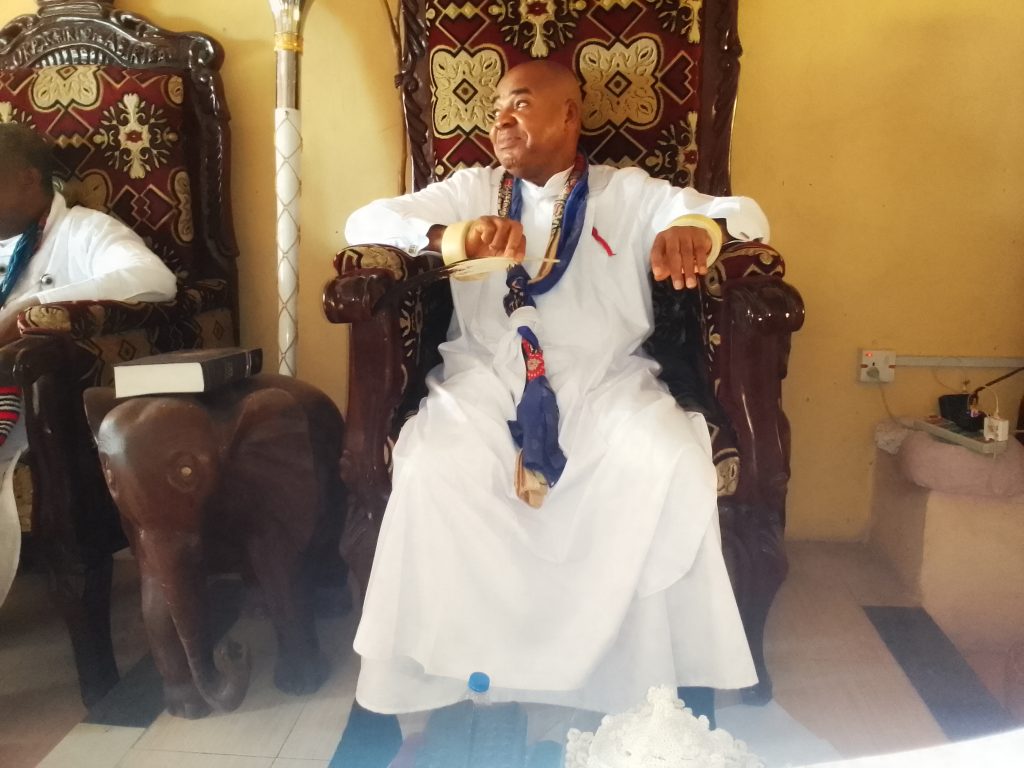
HRM EZE KALU KALU OGBU (IV) is an eleventh generation descendant of the founder of Abiriba and mounted the throne of his ancestors at the young age of 36 years. He is the second Eze to rule from Ifegwu Ekpe Ruling House of Nde Ekpe Royal Compound, Abiriba. He is the fourth Eze Abiriba to emerge from Nde Ekpe Royal Compound, Amaelunta, Abiriba; others being, Egbara Ogbu Ifegwu, Uduka Otaka Ukaegbu, Nmaju Otaka Uduka (a.k.a Nna Nmaju). He is the ninth Eze Abiriba to rule the kingdom from Amaelunta; others being Oko Uduka Ukpabi, Uduka Mbaeku Oko (a.k.a Udukanta or Uduka Okonta), Itu Okali Mbaeku, Egbara Ogbu Ifegwu, Ogbu Ikpe Chukwu, Uduka Otaka Ukaegbu, Nmaju Otaka Uduka (a.k.a Nna Nmaju) and Ikpe Mba Oko, Eze Kalu Kalu Ogbu is the current and seventeenth Enachioken of Abiriba Kingdom in the about 562 years of the existence of the dynasty.